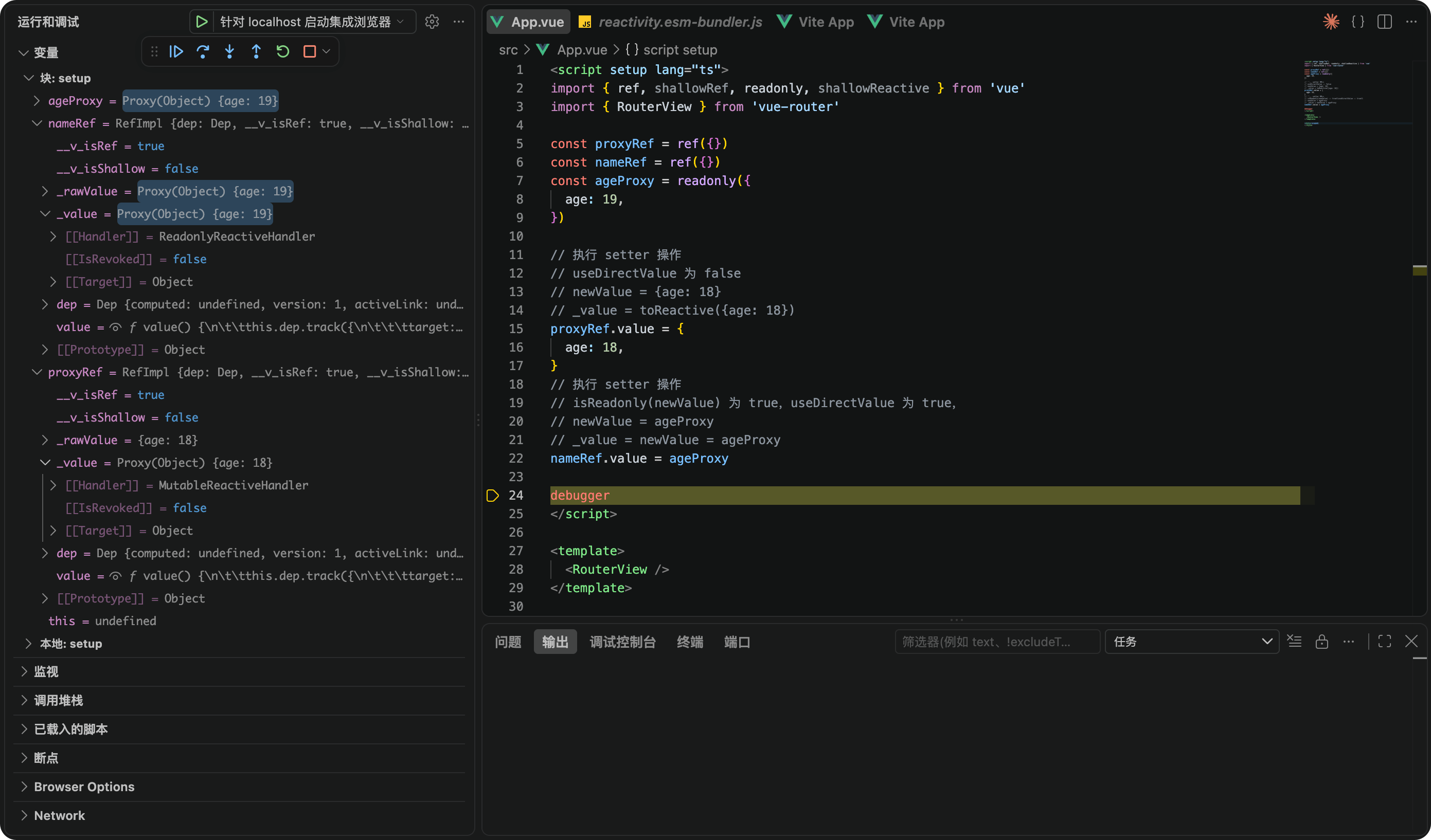
ref
Ref 可以持有任何类型的值,包括深层嵌套的对象、数组或者 JavaScript 内置的数据结构。
Ref 会使它的值具有深层响应性。这意味着即使改变嵌套对象或数组时,变化也会被检测到:
1
2
3
4
5
6
7
8
9
10
11
12
13
14
15
16
17
18
19
| const obj = ref({
nested: { count: 0 },
arr: ['foo', 'bar'],
})
watchEffect(() => {
console.log(obj.value.nested.count)
})
watchEffect(() => {
console.log(obj.value.arr.length)
})
obj.value.nested.count = 1000
obj.value.arr.push('baz')
|
ref 入口函数
1
2
3
4
| // packages/reactivity/src/ref.ts
export function ref(value?: unknown) {
return createRef(value, false)
}
|
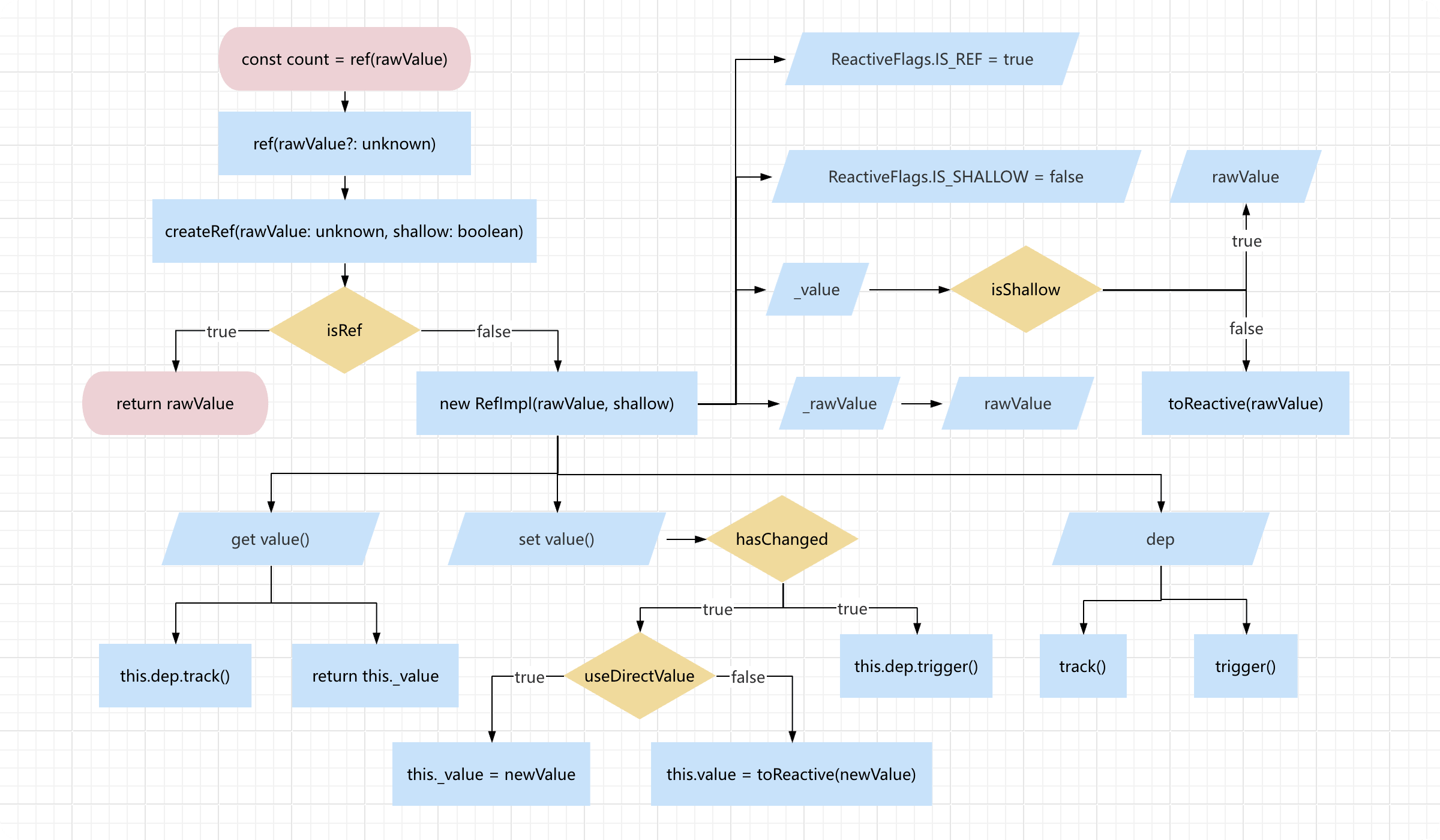
传入一个参数 value,通过 createRef 函数创建返回一个 ref 对象,该对象只有一个指向 value 的属性 .value。
createRef() 函数
1
2
3
4
5
6
7
8
9
10
11
12
13
14
15
16
|
export enum ReactiveFlags {
IS_REF = '__v_isRef',
}
export function isRef(r: any): r is Ref {
return r ? r[ReactiveFlags.IS_REF] === true : false
}
function createRef(rawValue: unknown, shallow: boolean) {
if (isRef(rawValue)) {
return rawValue
}
return new RefImpl(rawValue, shallow)
}
|
通过 createRef() 函数创建一个 ref 对象
- value 为 ref 对象的初始值
- shallow 为是否为浅响应式,默认值为 false。
isRef() 函数用于检查某个值是否为 ref。
- 如果值有
ReactiveFlags.IS_REF(__v_isRef) 属性,则该值已经是一个 ref 对象,直接返回 rawValue。
- 否则使用
RefImpl 类创建一个 ref 对象。
RefImpl 类
RefImpl 类源码
1
2
3
4
5
6
7
8
9
10
11
12
13
14
15
16
17
18
19
20
21
22
23
24
25
26
27
28
29
30
31
32
33
34
35
36
37
38
39
40
41
42
43
44
45
46
47
48
49
50
51
52
53
|
class RefImpl<T = any> {
_value: T
private _rawValue: T
dep: Dep = new Dep()
public readonly [ReactiveFlags.IS_REF] = true
public readonly [ReactiveFlags.IS_SHALLOW]: boolean = false
constructor(value: T, isShallow: boolean) {
this._rawValue = isShallow ? value : toRaw(value)
this._value = isShallow ? value : toReactive(value)
this[ReactiveFlags.IS_SHALLOW] = isShallow
}
get value() {
if (__DEV__) {
this.dep.track({
target: this,
type: TrackOpTypes.GET,
key: 'value',
})
} else {
this.dep.track()
}
return this._value
}
set value(newValue) {
const oldValue = this._rawValue
const useDirectValue =
this[ReactiveFlags.IS_SHALLOW] ||
isShallow(newValue) ||
isReadonly(newValue)
newValue = useDirectValue ? newValue : toRaw(newValue)
if (hasChanged(newValue, oldValue)) {
this._rawValue = newValue
this._value = useDirectValue ? newValue : toReactive(newValue)
if (__DEV__) {
this.dep.trigger({
target: this,
type: TriggerOpTypes.SET,
key: 'value',
newValue,
oldValue,
})
} else {
this.dep.trigger()
}
}
}
}
|
this.dep
每个 RefImpl 实例都有一个独立的 Dep 实例,它维护了一个订阅者集合。当你在模板中使用了一个 ref,然后改变了这个 ref 的值时,Vue 会自动检测到这个变化,并且相应地更新 DOM。这是通过一个基于依赖追踪的响应式系统实现的。当一个组件首次渲染时,Vue 会追踪在渲染过程中使用的每一个 ref。然后,当一个 ref 被修改时,它会触发追踪它的组件的一次重新渲染。
constructor()
1
2
3
4
5
6
7
8
|
export function toRaw<T>(observed: T): T {
const raw = observed && (observed as Target)[ReactiveFlags.RAW]
return raw ? toRaw(raw) : observed
}
this._rawValue = isShallow ? value : toRaw(value)
|
根据是否为浅响应式,设置 value 的原始值 _rawValue。
- 如果是浅响应式,直接返回value。
- 如果不是浅响应式,通过
toRaw 函数获取 value 的原始值,value 可能是一个响应式对象。
toRaw() 可以返回由 reactive()、readonly()、shallowReactive() 或者 shallowReadonly() 创建的代理对应的原始对象。
这是一个可以用于临时读取而不引起代理访问/跟踪开销,或是写入而不触发更改的特殊方法。
场景一
1
2
3
4
| const ageProxy = reactive({
age: 18,
})
const ageRef = shallowRef(ageProxy)
|
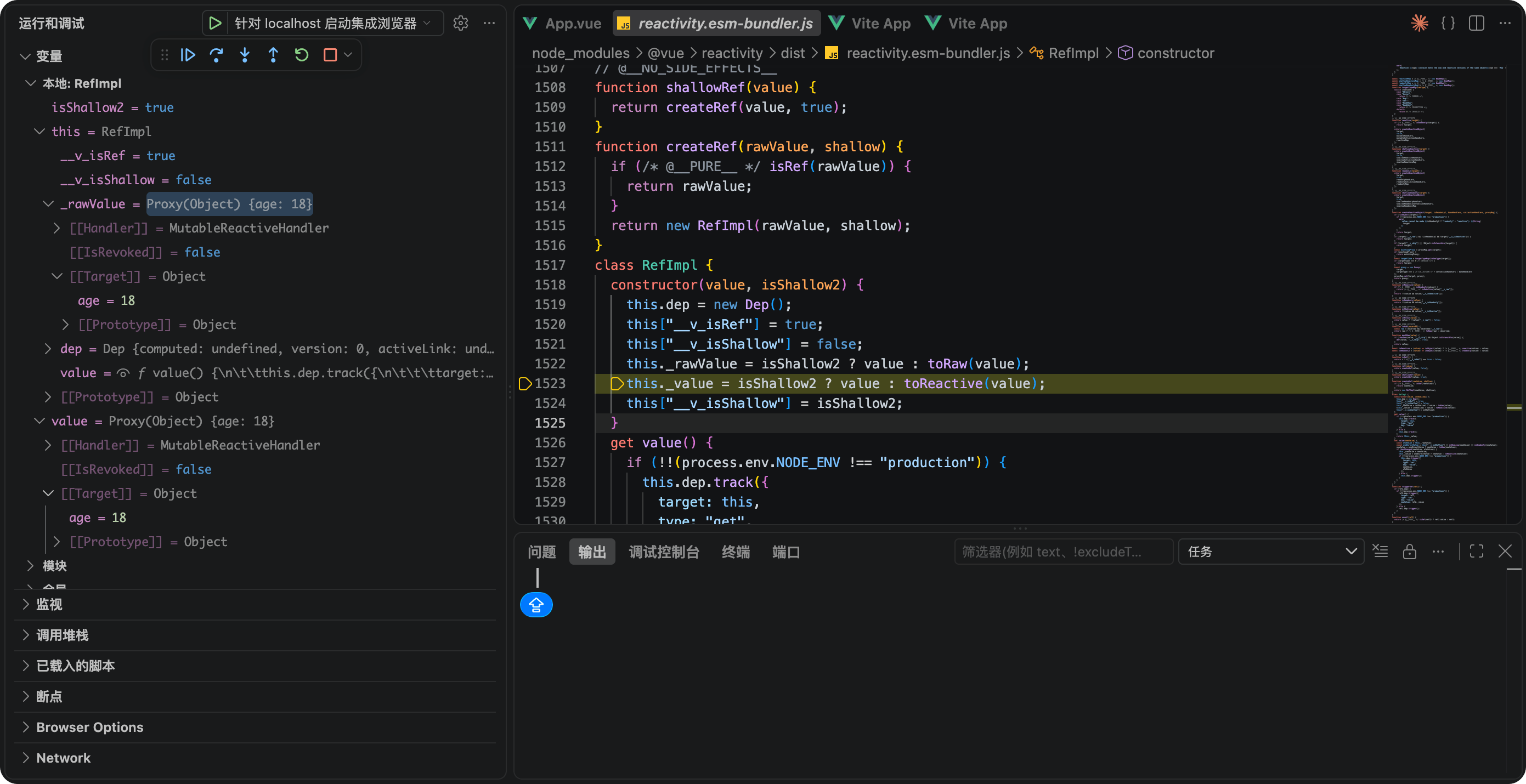
通过 shallowRef 函数创建一个浅响应式的 ref 对象。此时 isShallow 为 true,value 为 Proxy 代理对象,此时 _rawValue 为 Proxy 代理对象。
场景二
1
2
3
4
| const ageProxy = reactive({
age: 18,
})
const ageRef = ref(ageProxy)
|
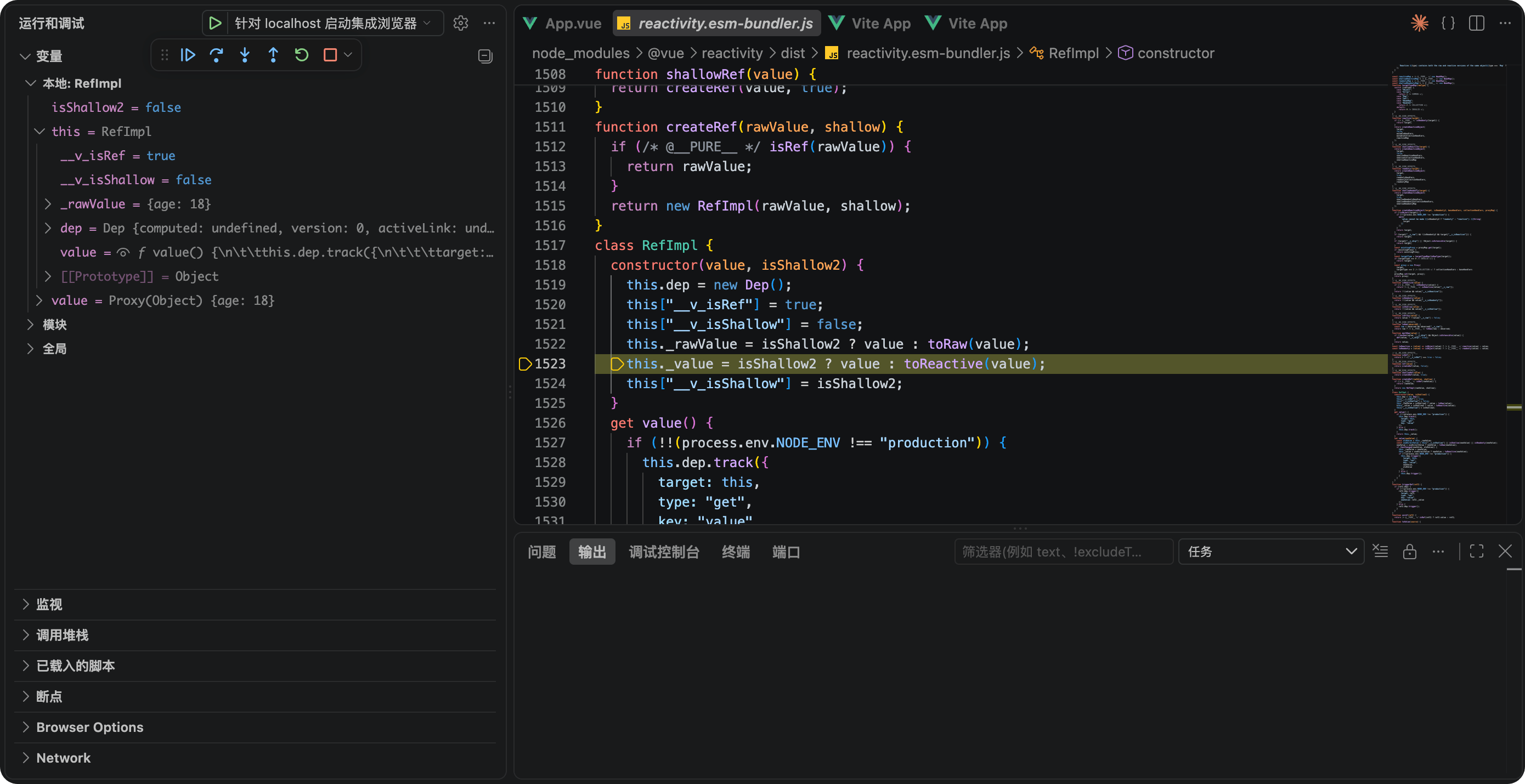
通过 ref 函数创建一个响应式 ref 对象。此时 isShallow 为 false, value 为 Proxy 代理对象。此时 _rawValue 为 toRaw(value) 的原始值,即 { age: 18 }。
1
2
3
4
5
6
|
export const toReactive = <T extends unknown>(value: T): T =>
isObject(value) ? reactive(value) : value
this._value = isShallow ? value : toReactive(value)
|
根据是否为浅响应式,设置 value 的处理值 _value。
- 如果是浅响应式,直接返回value。
- 如果不是浅响应式,通过
toReactive 函数转换为响应式值。
由此可知,当对象调用 ref(obj) 函数时,底层使用的是 reactive(obj)。
1
| this[ReactiveFlags.IS_SHALLOW] = isShallow
|
设置 RefImpl 类的属性值 ReactiveFlags.IS_SHALLOW 为 isShallow,用于判断是否为浅响应式 ref 对象。
get()
1
2
3
4
5
6
7
8
9
10
11
12
| get value() {
if (__DEV__) {
this.dep.track({
target: this,
type: TrackOpTypes.GET,
key: 'value',
})
} else {
this.dep.track()
}
return this._value
}
|
在标准的 JavaScript 中,检测普通变量的访问或修改是行不通的。然而,我们可以通过 getter 和 setter 方法来拦截对象属性的 get 和 set 操作。
value 属性给予了 Vue 一个机会来检测 ref 何时被访问或修改。在其内部,Vue 在它的 getter 中执行追踪,在它的 setter 中执行触发。
如果是 DEV 环境,依赖收集时添加 debugInfo 信息,用于调试时查看依赖关系。
场景示例
1
2
3
4
5
6
7
8
| const ageProxy = reactive({
age: 18,
})
const ageRef = ref(ageProxy)
const ageValue = ageRef.value
|
set()
1
2
3
4
5
| const useDirectValue =
this[ReactiveFlags.IS_SHALLOW] ||
isShallow(newValue) ||
isReadonly(newValue)
newValue = useDirectValue ? newValue : toRaw(newValue)
|
设置 ref 响应式对象的新值 newValue。
- 如果是浅响应式 ref,或者 newValue 是浅响应式值,或者 newValue 是只读值,则使用直接值, newValue = newValue。
- 否则通过
toRaw 函数转换为原始值, newValue = toRaw(newValue)。
1
2
3
4
5
6
7
8
9
10
11
12
13
14
15
16
17
18
19
20
21
22
|
export const hasChanged = (value: any, oldValue: any): boolean =>
!Object.is(value, oldValue)
const oldValue = this._rawValue
newValue = useDirectValue ? newValue : toRaw(newValue)
if (hasChanged(newValue, oldValue)) {
this._rawValue = newValue
this._value = useDirectValue ? newValue : toReactive(newValue)
if (__DEV__) {
this.dep.trigger({
target: this,
type: TriggerOpTypes.SET,
key: 'value',
newValue,
oldValue,
})
} else {
this.dep.trigger()
}
}
|
通过对比 newValue 和 oldValue 是否为同一对象,来判断值是否改变。
如果值改变
- 更新
this.\_rawValue 的值为 newValue
- 根据是否使用直接值更新
this.\_value 的值。如果为 useDirectValue 为true,this._value 为 newValue 。否则通过 toReactive 函数转换为响应式值,此时 this._value 为 toReactive(newValue) 。
- 触发依赖收集的组件重新渲染。
场景示例
1
2
3
4
5
6
7
8
9
10
11
12
13
14
15
16
17
18
| const proxyRef = ref({})
const nameRef = ref({})
const ageProxy = readonly({
age: 19,
})
proxyRef.value = {
age: 18,
}
nameRef.value = ageProxy
|